Reliability engineering in practice: observability, incident response, and 24/7 SRE that keeps systems up.
Reaching 99.9% uptime comes down to three things: define availability in terms your users actually experience, spend a fixed error budget deliberately, and shrink both how often failures happen and…
An error budget is the amount of unreliability your service is allowed to have over a defined period before you stop shipping risky changes and focus on stability.
When a vendor advertises 99.9% uptime, it means the service is permitted to be unavailable for roughly 8 hours and 46 minutes per year, or about 43 minutes per month. That single decimal point…
Three nines of availability, or 99.9 uptime, means your service can be unavailable for roughly 8 hours and 46 minutes per year, about 43 minutes and 50 seconds per month, or just over 10 seconds per…
When a vendor promises 99.9% uptime, they are committing to no more than roughly 8 hours and 46 minutes of downtime per year. That is the whole answer in one sentence. The hard part is understanding…
A 99.9% uptime SLA means your service provider commits to keeping a system available 99.9% of the time, which translates to roughly 8 hours and 46 minutes of allowed downtime per year. Put…
To achieve 99.9% uptime, you need to engineer for failure rather than hope to avoid it: eliminate single points of failure, automate failover, instrument everything, and rehearse your incident…
Achieving 99.9% uptime comes down to one discipline: shrinking the time between when something breaks and when it is fully recovered. You get there by budgeting your allowable downtime,…
If you want to reduce on-call burnout, structure your sre pager duty rotation around three principles: keep per-engineer alert volume low enough to allow recovery, distribute load fairly across a…
The difference between 99.9 uptime and 99.99% uptime is not a rounding error. It is roughly 43 minutes of allowed downtime per month versus 4 minutes. To calculate your SLA, multiply your…
To achieve 99.9 uptime, you need to design for failure rather than hope to avoid it: set an explicit availability target backed by an error budget, eliminate single points of failure across your…
When a vendor promises 99.9 uptime, they are committing to no more than about 8 hours and 46 minutes of downtime per year. That single number, often called "three nines," is a contractual budget for…
If you are deciding between synthetic monitoring vs RUM for uptime management, the short answer is: use both, but for different jobs. Synthetic monitoring gives you proactive, repeatable checks that…
If your team dreads SRE pager duty rotations because the pager fires constantly, the fastest way to reduce pager fatigue is to cut the volume of alerts that reach a human. Most on-call pain is not…
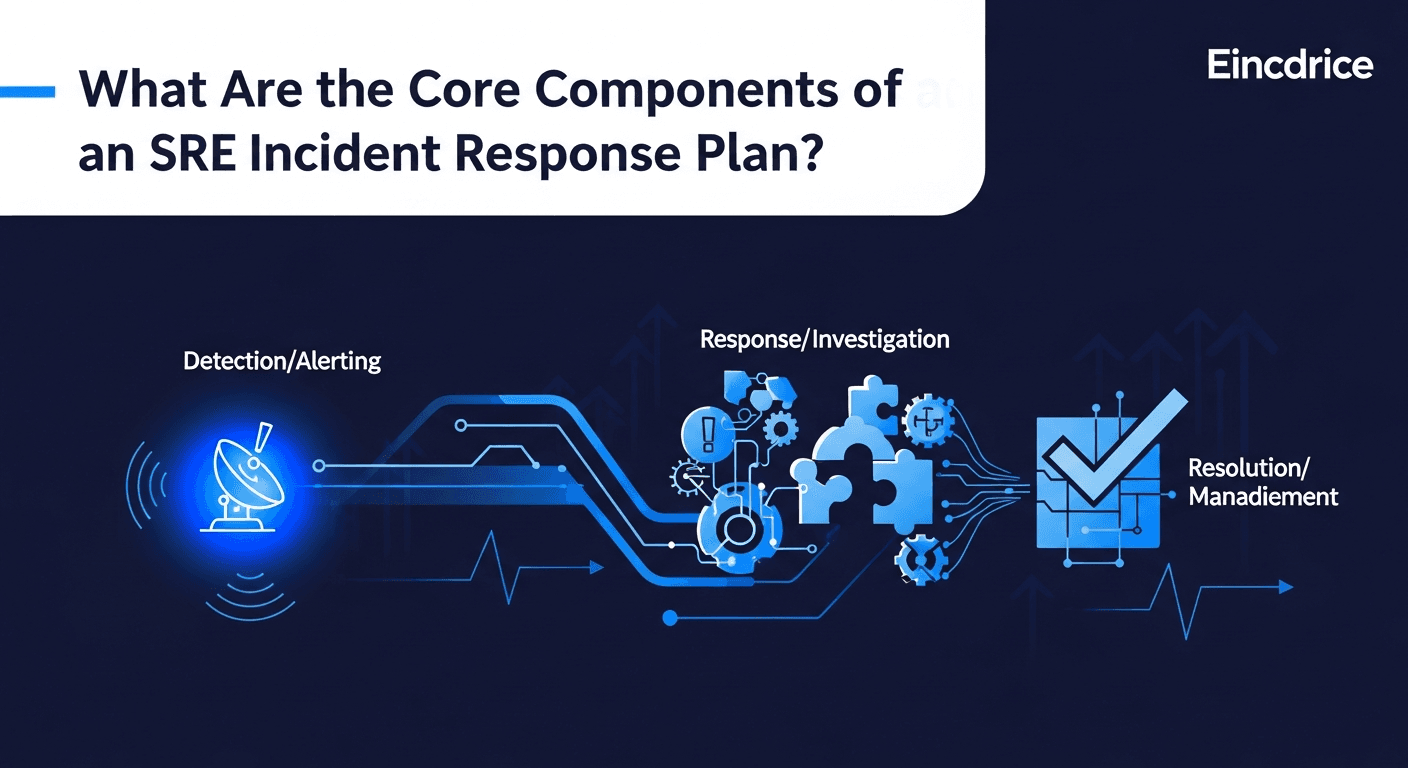
An effective incident response plan for an SRE organization comes down to six components working together: clear severity classification, well-defined roles, reliable detection and alerting, a…
To reduce pager fatigue, cut the volume of pages that reach a human, route only actionable alerts to the on-call engineer, and build a rotation that respects sleep, recovery, and fair distribution…
If you are trying to decide between synthetic monitoring vs rum for proactive uptime management, the honest answer is that you need both, but for different jobs. Synthetic monitoring catches outages…
Waiting for your users to report an outage means you are already losing revenue and trust. A proper synthetic monitoring setup solves this by running scripted, automated checks against your…
An effective SRE incident response plan has six core components: clear detection and alerting, a defined incident command structure, severity classification, structured communication channels,…
If you wait for users to report an outage, you have already lost. The key uptime metrics for proactive management are the ones that surface degradation before it becomes downtime: availability…