What Are the Key Components of an Effective SRE Incident Response Plan?

An effective incident response plan for an SRE organization comes down to six components working together: clear severity classification, well-defined roles, reliable detection and alerting, a structured communication protocol, a repeatable resolution workflow, and blameless post-mortems that feed back into your systems. If any one of these is missing, incidents take longer to resolve, escalations stall, and the same failures recur. In this post I will walk through each component, show how they connect, and give you concrete artifacts you can adapt for your own team.
Most teams do not fail during an incident because they lack talented engineers. They fail because the process is ambiguous under pressure. People do not know who is in charge, what "critical" means, or where to post updates. A good incident response plan removes that ambiguity so your engineers can focus on the technical problem instead of improvising the process.
Why an Incident Response Plan Matters for Uptime Management
Uptime is a product feature. When your service is down, customers do not care about the root cause; they care about how long it takes you to recover. That is why SRE incident management treats time-to-detect and time-to-recover as first-class metrics.
The discipline here traces back to Google's Site Reliability Engineering practices, which formalized error budgets and the idea that reliability is engineering work, not heroics. The Google SRE book remains a good public reference for the underlying philosophy.
A written plan gives you three concrete benefits:
- Consistency. Every incident is handled the same way regardless of who is on call.
- Speed. Roles and runbooks are agreed in advance, so no time is lost negotiating process.
- Learning. Post-mortems turn each failure into a permanent improvement.
Let me break down the components.
Component 1: Severity Classification
You cannot respond proportionally if you cannot tell a minor blip from a full outage. Severity levels drive escalation, staffing, and communication cadence, so define them explicitly.
A workable model looks like this:
| Severity | Definition | Example | Response |
|---|---|---|---|
| SEV1 | Full or partial outage affecting most users; revenue or safety impact | Checkout unavailable | Page immediately, all hands, exec notification |
| SEV2 | Significant degradation for a subset of users | Elevated error rate in one region | Page on-call, incident channel opened |
| SEV3 | Minor issue, workaround exists | Non-critical batch job failing | Ticket, business-hours handling |
Write these definitions where on-call engineers can find them at 3 a.m. Ambiguity here is the single most common cause of a botched major incident process: someone calls a SEV1 a SEV3 and no one wakes up.
Component 2: Clearly Defined Roles
Under load, "everyone jumps in" is not a strategy. Borrowing from the Incident Command System, assign explicit roles at the start of every significant incident:
- Incident Commander (IC). Owns the incident. Coordinates, makes decisions, and delegates. The IC does not debug; they run the response.
- Operations / Subject Matter Experts. The engineers actually investigating and applying fixes.
- Communications Lead. Handles stakeholder and customer updates so responders are not interrupted.
- Scribe. Maintains a timestamped log of actions, decisions, and hypotheses.
The single most important rule: the IC is a coordination role, not a technical one. When your best engineer is both leading and debugging, the coordination suffers. For smaller teams, one person may wear multiple hats, but the IC role should always be named out loud.
Component 3: Detection and Alerting
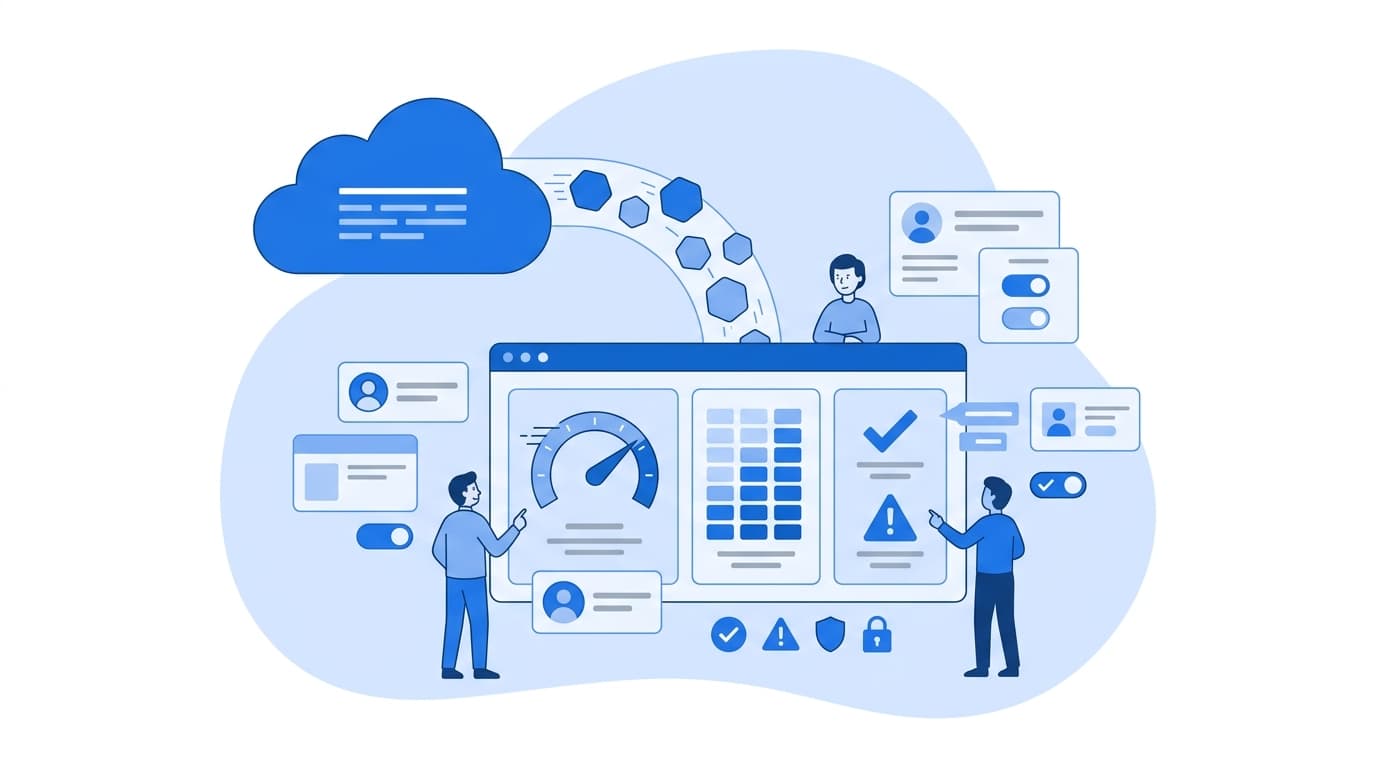
You cannot respond to what you cannot see. Detection is where reliability engineering meets observability. Your alerts should be tied to symptoms users experience, not just raw resource metrics.
A useful practice is to alert on your Service Level Objectives. If your SLO says 99.9% of requests should return under 300ms, alert when your error budget burn rate threatens that target. Here is a simplified Prometheus alerting rule expressing a fast burn-rate alert:
groups:
  - name: slo-alerts
    rules:
      - alert: HighErrorBudgetBurn
        expr: |
          (
            sum(rate(http_requests_total{status=~"5.."}[5m]))
            /
            sum(rate(http_requests_total[5m]))
          ) > (14.4 * 0.001)
        for: 2m
        labels:
          severity: sev1
        annotations:
          summary: "Fast error budget burn on {{ $labels.service }}"
          runbook: "https://runbooks.internal/high-error-burn"
Two design principles matter more than the exact query:
- Every alert must be actionable. If a page does not require human action, it is noise, and noise erodes trust in the whole system.
- Every alert should link to a runbook. The
runbookannotation above is not optional. A page at 3 a.m. with no next step wastes the most expensive minutes of the incident.
Component 4: Communication Protocol
Poor communication turns a technical incident into a business crisis. Decide in advance where updates go and how often.
- Internal channel. A dedicated, per-incident channel (for example,
#inc-2024-0142) keeps discussion in one place and creates a searchable record. - Stakeholder updates. The Communications Lead posts on a fixed cadence, say every 30 minutes for a SEV1, even when the update is "still investigating, next update in 30 minutes."
- Customer-facing status. A status page keeps customers informed and reduces inbound support load.
A simple update template keeps messages consistent:
[SEV1][UPDATE 14:30 UTC]
Impact: Checkout failing for ~20% of EU users.
Status: Rolled back deploy 4471; monitoring recovery.
Next update: 15:00 UTC.
IC: <name>
Component 5: The Resolution Workflow
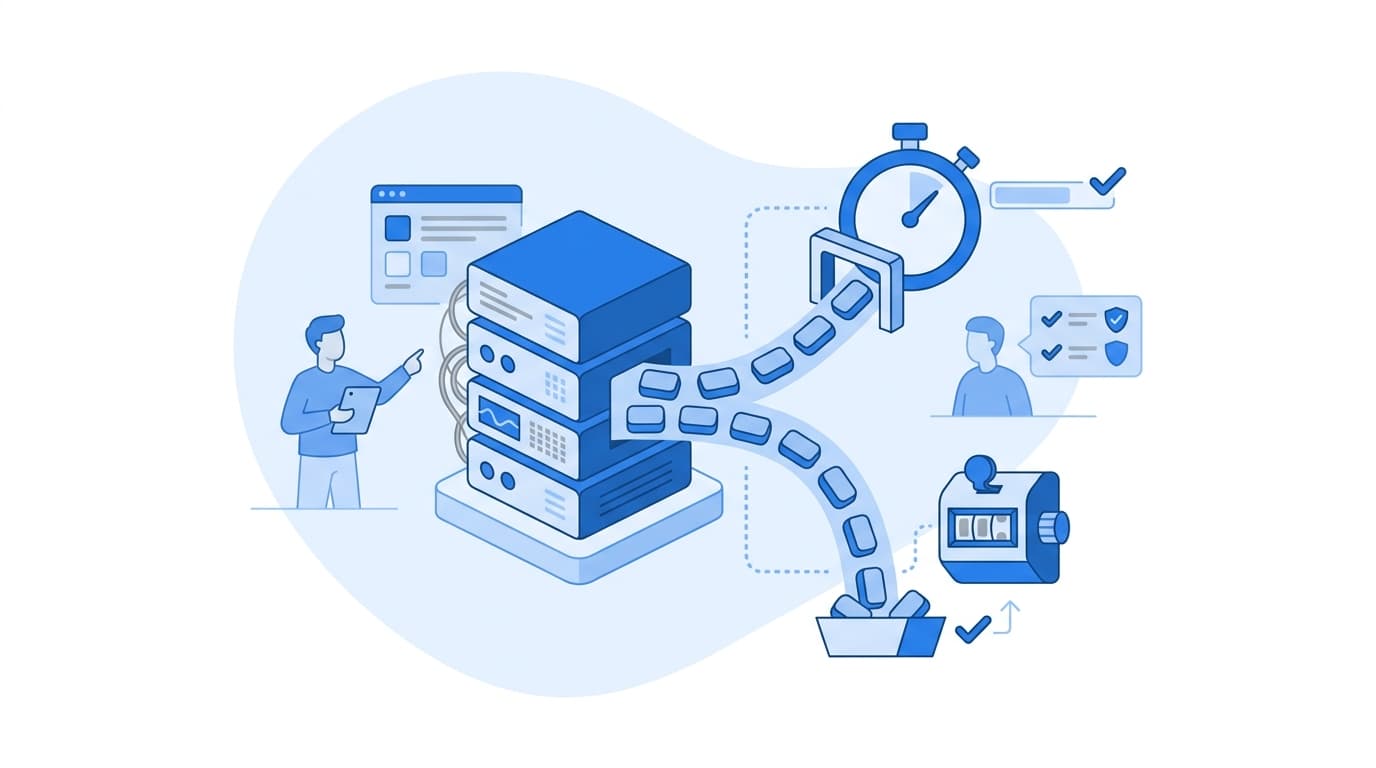
This is the repeatable spine of your major incident process. Write it as a checklist so no step depends on memory:
- Detect via alert or report.
- Triage and assign severity.
- Declare the incident and open the channel.
- Assign the IC and supporting roles.
- Investigate using runbooks and dashboards.
- Mitigate first, then fix. Restoring service takes priority over finding root cause.
- Verify recovery against SLOs, not just gut feel.
- Resolve and close the incident.
- Schedule the post-mortem.
Point 6 deserves emphasis. Mitigation is not the same as a fix. A rollback, feature flag, or traffic shift that restores service buys you time to investigate calmly. Reaching for the perfect fix while users are down is a common and costly mistake.
Component 6: Blameless Post-Mortems
The incident is not over when the service recovers. It is over when you have captured what you learned. Post-mortem best practices center on one principle: focus on systems and processes, not individuals.
A useful post-mortem document includes:
- Summary. What happened, in plain language.
- Impact. Duration, users affected, business consequences.
- Timeline. Timestamped, sourced from the scribe's log.
- Root cause analysis. The technical and process factors that allowed the failure.
- Action items. Specific, owned, and tracked, each with a due date.
The word blameless is doing real work here. If engineers fear punishment, they hide details, and you lose the information that prevents recurrence. As the SRE literature puts it, you assume everyone acted with good intentions given what they knew at the time. Track action items to completion in your normal backlog. A post-mortem that produces no closed action items is theater.
Putting the Plan Into Practice
A plan on paper does nothing until it is rehearsed. Two practices make the difference:
- Game days. Deliberately inject failures in a controlled setting and run the full response, roles and all. This surfaces gaps before a real incident does.
- On-call hygiene. Sustainable rotations, sensible alert volumes, and clear escalation paths keep the humans in your incident response plan healthy.
Building this operational muscle is exactly the kind of work we focus on in our managed services and SRE capabilities, and the reliability requirements differ meaningfully across sectors, which is why we tailor these processes by domain in the industries we serve.
The goal is not to eliminate incidents. That is impossible for any system doing meaningful work. The goal is to make incidents boring: detected quickly, handled calmly, communicated clearly, and never repeated. That is what an effective incident response plan delivers, and it is the foundation of durable uptime management.
FAQ
What is the difference between an incident response plan and a runbook?
An incident response plan is the overarching process: how you classify, staff, communicate, and learn from incidents. A runbook is a narrow, step-by-step guide for handling a specific failure mode, such as a full disk or a failing dependency. The plan tells you how to run the response; runbooks tell you how to fix particular problems.
Who should be the Incident Commander?
Any trained responder can be the IC. It is a coordination role, not a seniority or technical-depth role. Many mature teams rotate IC duty and train broadly so the role is never dependent on one person. The IC's job is to keep the response organized, delegate technical work, and make decisions, not to debug the system personally.
How soon should we run a post-mortem after an incident?
Within a few business days, while details are fresh but people are no longer exhausted. Waiting too long loses context; rushing it while responders are still drained produces shallow analysis. Schedule it before the incident is formally closed so it does not get dropped.
Should every incident get a post-mortem?
Not every minor blip needs a full document, but every SEV1 and SEV2 should. A good rule is to require post-mortems for any incident with meaningful customer impact or any near-miss that could have been severe. The cost of the write-up is small compared with repeating the failure.