Signs Your Enterprise Architecture Is Blocking Business Agility
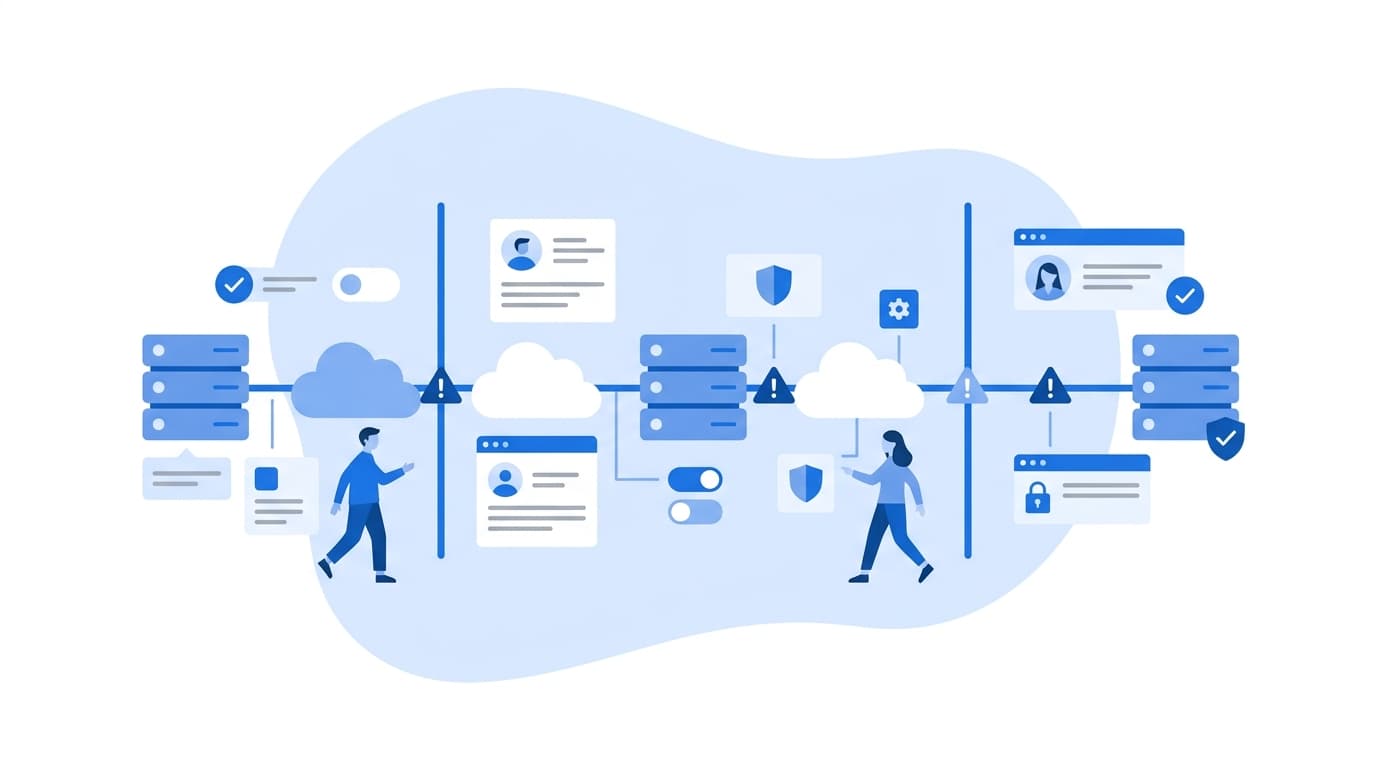
Your enterprise architecture is blocking business agility when small business changes need large technical coordination. The clearest signs: routine features require synchronized releases across several teams, systems integrate through a shared database, nobody can say which system owns a business capability, and lead time is dominated by waiting on approvals, environments, or other teams rather than by building. If two or more of these sound familiar, the constraint is probably structural, not a matter of team effort or methodology.
I want to unpack each sign, show how to measure it with data you already have, and outline an IT agility roadmap that removes architecture bottlenecks without a risky big-bang rewrite.
Why Architecture, Not Process, Is Often the Real Constraint on Business Agility
Many organizations adopt agile delivery practices and still find that the business waits months for changes. In my experience, that gap usually comes from the shape of the systems, not the shape of the sprint.
Melvin Conway observed in 1968 that organizations design systems that mirror their communication structures. The reverse also holds: once a system's structure is set, it dictates how teams must communicate to change it. If your order, pricing, and inventory logic all live in one tightly coupled codebase backed by one schema, then any change to pricing requires conversations with everyone who touches that schema. No retrospective fixes that.
The research in Accelerate (Forsgren, Humble, and Kim) makes the same point from a different angle. Loosely coupled architecture, where teams can test and deploy independently, was one of the strongest predictors of delivery performance in their study. Process improvements sit on top of architecture. They cannot fully compensate for it.
Seven Architecture Bottlenecks to Look For
1. Small changes require coordinated releases
If adding a field to a customer form means three teams must deploy in a specific order on the same night, your components are coupled at deploy time. Release trains and "big release weekends" are often a symptom of this, not a deliberate choice.
Ask: What fraction of our changes can one team ship alone, today, without asking anyone?
2. The database is the integration layer
When multiple applications read and write the same tables, the schema becomes a public contract that nobody owns. Renaming a column turns into an archaeology project. Teams stop improving data models because the blast radius is unknown.
3. Integrations break in ways nobody predicted
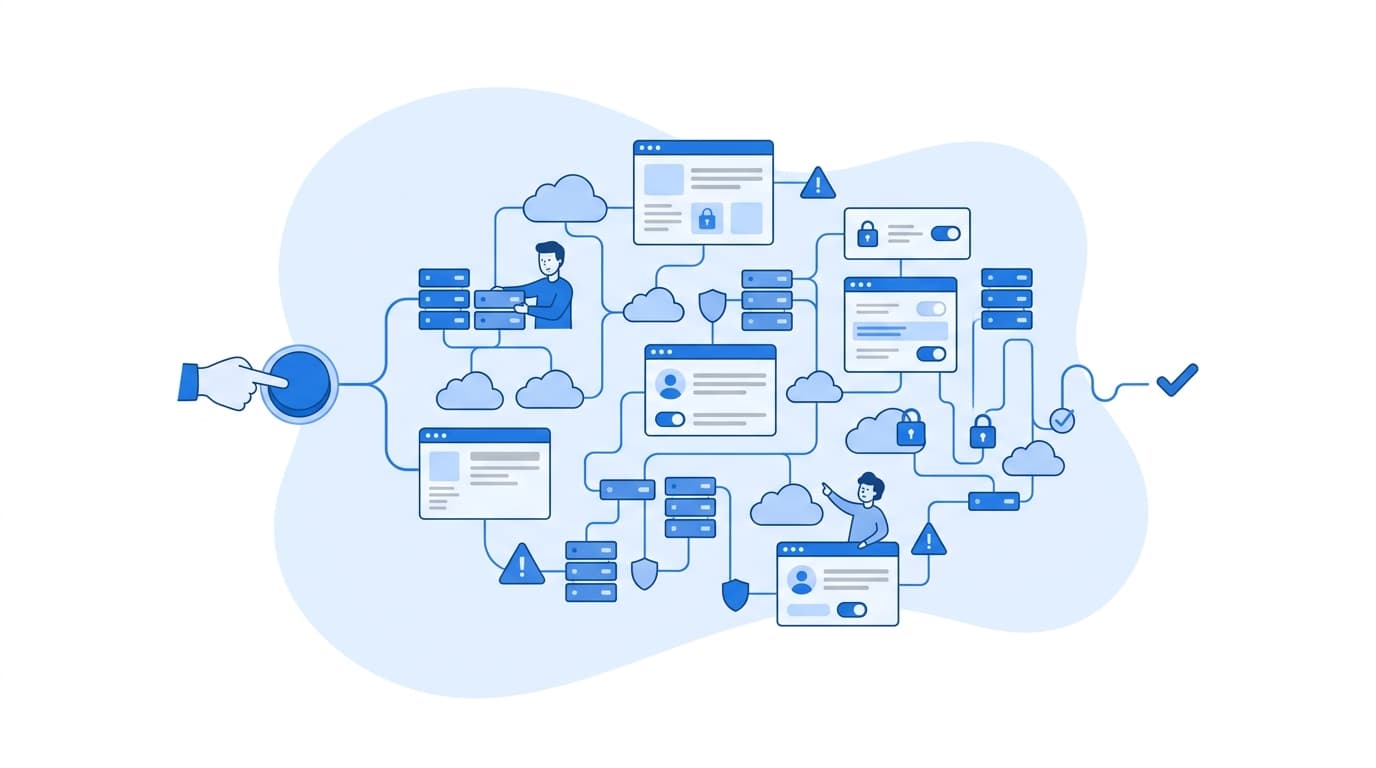
Point-to-point integrations accumulate over years. A change to one interface surfaces as an outage in a consumer no one knew existed. Without explicit, versioned contracts, every change carries hidden risk, so people make fewer changes.
4. No clear owner for business capabilities
Ask "which system and which team own customer eligibility?" If the answer involves several systems, a spreadsheet, and "it depends," capability boundaries and system boundaries do not line up. Team Topologies (Skelton and Pais) describes this as a mismatch between team cognitive load and system boundaries, and it shows up as constant handoffs.
5. Governance acts as a gate rather than a guardrail
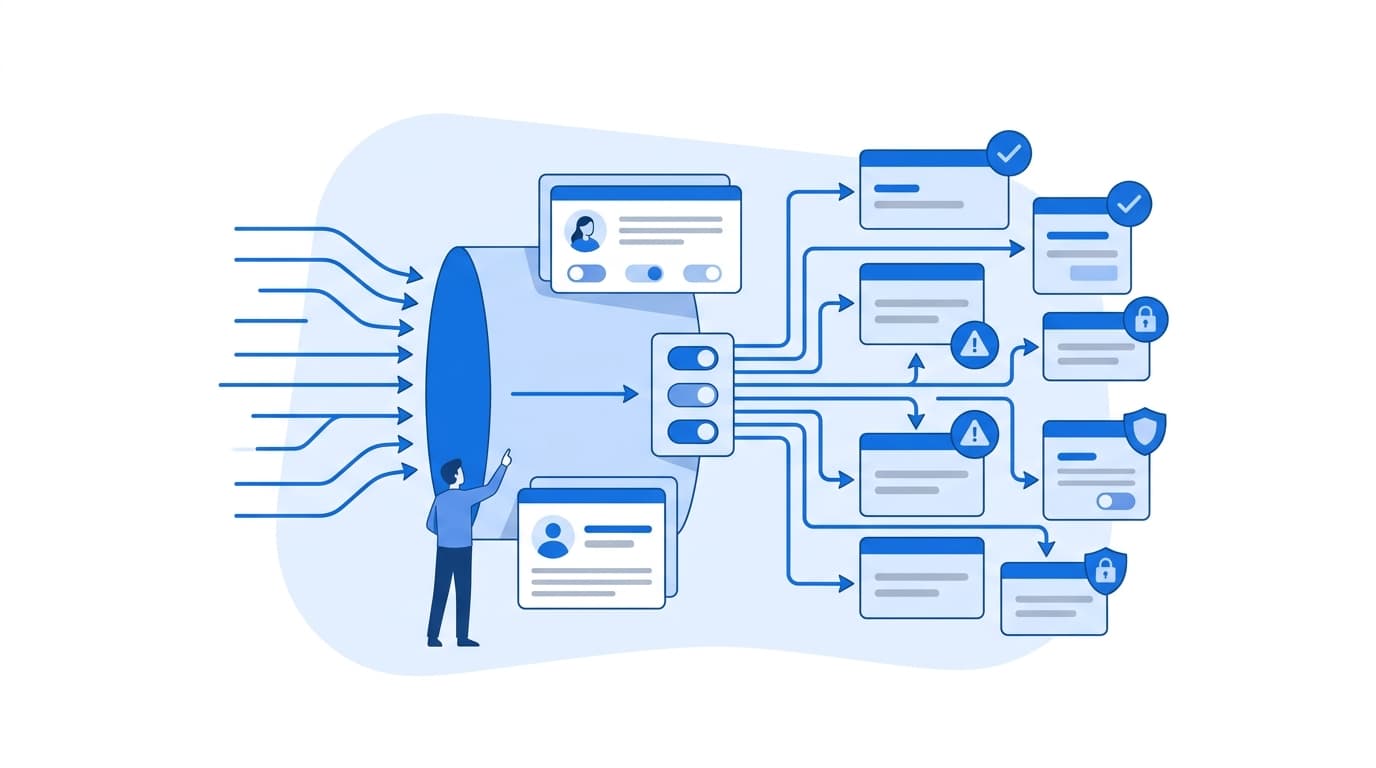
Architecture review boards exist for good reasons: consistency, security, cost control. They become a bottleneck when every change waits for a monthly meeting. If teams batch work to get through review, or route around it, governance is slowing delivery without adding proportional assurance.
6. Environments and infrastructure take weeks
When a new service needs a ticket to provision a database, another for networking, and a third for access, infrastructure is a queue. The business sees this as "IT is slow," even though no individual team is.
7. Getting data to make a decision requires a project
Business agility is not only about shipping software. It is also about how quickly people can answer a question. If a new report requires an extract job, a change request, and a reconciliation exercise, data architecture is limiting decision speed.
How to Measure Architecture Bottlenecks With Data You Already Have
Opinions about architecture are cheap. Evidence moves budget conversations. Here are two practical starting points.
Start with the four key delivery metrics
The DORA metrics popularized by Accelerate (deployment frequency, lead time for changes, change failure rate, and time to restore service) give you a baseline. The useful move is to break lead time into stages. If coding takes two days and waiting for a release window takes three weeks, you have located the problem.
Mine change coupling from version control
Files or modules that always change together reveal coupling that diagrams hide. This rough script counts how often pairs of top-level directories appear in the same commit over the last six months:
# Pairs of top-level directories that change in the same commit (last 6 months)
git log --since="6 months ago" --name-only --pretty=format:'--%H' \
  | awk -F/ '
      /^--/ { if (n > 1) for (i in d) for (j in d) if (i < j) print i " <-> " j
              delete d; n = 0; next }
      NF    { if (!($1 in d)) { d[$1] = 1; n++ } }
      END   { if (n > 1) for (i in d) for (j in d) if (i < j) print i " <-> " j }' \
  | sort | uniq -c | sort -rn | head -20
If orders and billing show up together in a large share of commits, they are effectively one unit, whatever the org chart says. For multi-repository estates, apply the same idea to linked work items or deployment records instead of commits.
Interpret this with care. Some co-change is healthy, such as a feature touching its API and its UI. What you are looking for is co-change across boundaries you intended to be independent.
Building an IT Agility Roadmap
Once you know where the bottlenecks are, the goal is incremental decoupling with measurable checkpoints. This is the sequence I recommend.
- Map capabilities before systems. List the business capabilities that change most often or matter most to strategy. Map each to the systems and teams that touch it. The capabilities with the most systems and handoffs are your first candidates.
- Pick one seam, not the whole estate. Choose a single capability where decoupling would visibly shorten lead time. Early, visible wins build the credibility needed for harder work later.
- Strangle, don't rewrite. Martin Fowler's Strangler Fig pattern routes traffic for one capability to a new component while the legacy system keeps running. Risk stays bounded and rollback stays possible.
- Give data a single owner. Move from shared tables to a capability-owned store exposed through an API or events. Consumers integrate against a contract, not a schema.
- Turn governance into automated guardrails. Encode architecture decisions as tests that run in the pipeline. Building Evolutionary Architectures (Ford, Parsons, and Kua) calls these fitness functions.
- Make infrastructure self-service. Templated, policy-checked provisioning replaces tickets while keeping security and cost controls in place.
- Re-measure. Compare lead time and change coupling against your baseline. If they have not moved, revisit the seam you chose.
Example: an architecture rule as a pipeline check
Instead of asking a review board to verify that the orders module does not reach into billing internals, write the rule down and let the build enforce it. Using ArchUnit for a Java codebase:
@AnalyzeClasses(packages = "com.example")
class BoundaryRules {

    @ArchTest
    static final ArchRule ordersUseBillingOnlyThroughItsApi =
        noClasses().that().resideInAPackage("..orders..")
            .should().dependOnClassesThat()
            .resideInAPackage("..billing.internal..");
}
The review board can then spend its time on genuinely novel decisions, while routine boundary enforcement happens on every commit. Equivalent tools exist for most ecosystems, and policy-as-code tools such as Open Policy Agent apply the same idea to infrastructure.
What Agile Enterprise Architecture Looks Like in Practice
Agile enterprise architecture is not the absence of architecture. It is architecture designed to make change cheap. In practice that means:
- Boundaries follow business capabilities, and each has a clearly accountable team.
- Contracts are explicit and versioned, so consumers are not surprised.
- Standards are enforced by automation, with human review reserved for real trade-offs.
- Architects work across levels, connecting executive strategy to engineering decisions. Gregor Hohpe's The Software Architect Elevator describes this role well.
The right target state depends heavily on regulatory context, legacy constraints, and risk tolerance, which vary considerably across the industries we work in. Approaches that suit a digital-native retailer may need adjustment in heavily regulated environments. If you want a structured outside view of where your estate stands, our IT strategy and advisory capabilities cover assessment and roadmap work of this kind.
References
- Conway, M. E. "How Do Committees Invent?" Datamation, 1968.
- Forsgren, N., Humble, J., and Kim, G. Accelerate. IT Revolution, 2018.
- Skelton, M., and Pais, M. Team Topologies. IT Revolution, 2019.
- Ford, N., Parsons, R., and Kua, P. Building Evolutionary Architectures. O'Reilly, 2017.
- Fowler, M. "StranglerFigApplication." martinfowler.com, 2004.
- Hohpe, G. The Software Architect Elevator. O'Reilly, 2020.
FAQ
What is the most reliable sign that architecture is limiting business agility?
Look at how often a single team can ship a change without coordinating with others. If most meaningful changes need multi-team synchronization, coupling in the architecture is the likely constraint, regardless of which delivery methodology you use.
Do we need to move to microservices to fix this?
Not necessarily. Microservices are one way to achieve independent deployability, and they add operational complexity. A well-structured modular monolith with enforced internal boundaries can deliver much of the benefit at lower cost. Choose based on the bottlenecks you have measured, not on trends.
How long does an IT agility roadmap take to show results?
It depends on the estate and the seam you choose. That is why I recommend starting with one capability where improvement is measurable, then expanding. Avoid committing to timelines before you have baseline metrics.
How do we keep governance and compliance while moving faster?
Encode recurring rules as automated checks in pipelines and provisioning templates. This often improves assurance, because rules are applied on every change rather than sampled in periodic reviews. Human review stays focused on new or high-risk decisions.
Who should own the architecture modernization effort?
It works best as a shared effort: business leaders prioritize capabilities, architects define boundaries and guardrails, and delivery teams own the systems inside those boundaries. Ownership that sits only with a central architecture group tends to recreate the bottleneck it is meant to remove.