What Is a Secure-by-Design DevSecOps Pipeline?
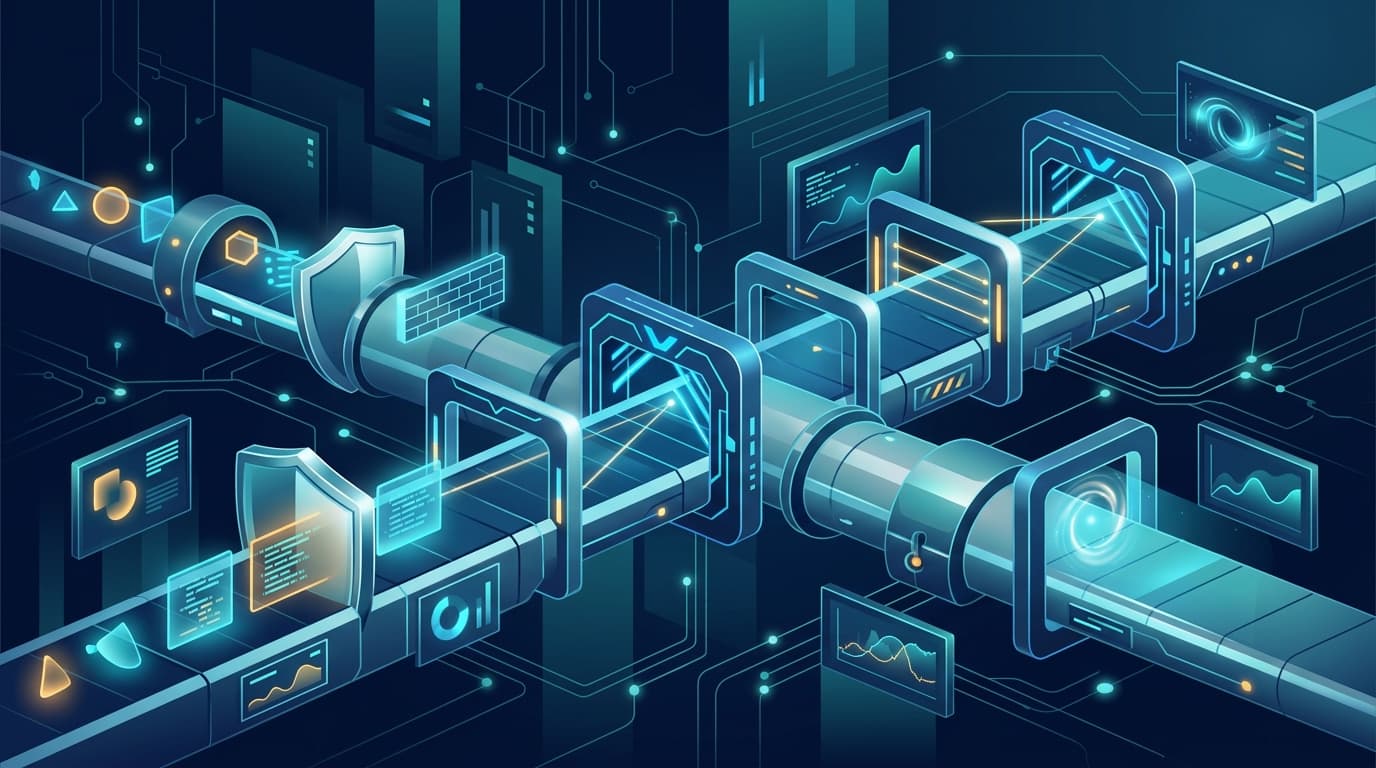
A secure-by-design DevSecOps pipeline is a software delivery pipeline where security controls are built into every stage of development and deployment by default, rather than bolted on after the code is written. Being secure by design means the safe path is the default path: engineers inherit hardened base images, secrets scanning, dependency checks, and policy gates automatically, so shipping insecure software requires actively bypassing controls instead of simply forgetting to add them.
If you are reading this, you probably already have a CI/CD pipeline. The problem you are trying to solve is different: your security testing happens too late, your findings arrive after release, and your engineers treat security as someone else's job. This post explains what a secure-by-design pipeline actually looks like, the stages involved, and how to adopt it without grinding delivery to a halt.
The Problem With Bolt-On Security
Most teams start with a delivery pipeline that optimizes for speed and add security later. That sequencing creates predictable failure modes:
- Findings arrive too late. A vulnerability discovered in a penetration test the week before launch is expensive to fix. The same issue caught in a pull request costs minutes.
- Security is a gate, not a guardrail. When the only security check is a manual review at the end, it becomes a bottleneck that teams learn to route around.
- Ownership is unclear. If a separate team owns "security," developers have no incentive to write secure code, and security engineers have no context on the application.
The core idea behind shift left security is to move testing and controls earlier in the software development lifecycle, closer to the moment code is written. Secure by design goes one step further: the pipeline itself enforces the controls so correctness is not left to memory or goodwill.
Secure by Design: What It Actually Means
Secure by design is a principle, not a product. It has three practical implications for your pipeline.
1. Safe defaults over optional add-ons
Engineers should not have to opt into security. The base container image is already hardened. The Terraform module already sets encryption at rest. The service template already emits structured audit logs. When the secure choice is the default, adoption is automatic.
2. Controls enforced in code, not documentation
A policy that lives in a wiki page is a suggestion. A policy encoded as a pipeline check is a control. This is why SDLC security in a mature organization looks like policy-as-code: rules that run automatically and produce a pass/fail result.
# Example: OPA/Conftest policy blocking privileged containers
package main

deny[msg] {
  input.kind == "Deployment"
  c := input.spec.template.spec.containers[_]
  c.securityContext.privileged == true
  msg := sprintf("container '%s' must not run privileged", [c.name])
}
3. Feedback where engineers already work
Security findings should appear in the pull request, the IDE, and the build log, not in a quarterly report. Fast, contextual feedback is what makes developers fix issues instead of resenting them.
The Stages of a DevSecOps Pipeline
A DevSecOps pipeline integrates security controls at each phase of the delivery flow. Here is what each stage looks like when done well.
Plan and design
Security starts before any code exists. Threat modeling identifies what can go wrong and which controls matter most. You do not need a heavyweight process. A lightweight, repeatable exercise using a framework like STRIDE, run during design review, catches architectural flaws that no scanner will ever find.
Document trust boundaries, data classification, and authentication flows. These artifacts feed directly into the controls you enforce later.
Code
At the coding stage, two categories of checks matter:
- Static Application Security Testing (SAST): analyzes source code for insecure patterns like SQL injection, hardcoded secrets, and unsafe deserialization.
- Secrets scanning: prevents credentials, tokens, and keys from ever reaching your repository history.
Run these as pre-commit hooks and in CI so problems are caught before merge.
# Example: pre-commit + CI secrets and SAST stage
security-scan:
  stage: test
  script:
    - gitleaks detect --source . --no-git -v
    - semgrep --config auto --error
  rules:
    - if: $CI_PIPELINE_SOURCE == "merge_request_event"
Build
The build stage is where application security meets supply chain security. Modern attacks increasingly target dependencies and build systems rather than your own code.
- Software Composition Analysis (SCA): identifies known vulnerabilities (CVEs) in third-party libraries.
- SBOM generation: produces a Software Bill of Materials so you can answer "are we affected?" within minutes when the next Log4Shell-style disclosure lands.
- Artifact signing: cryptographically signs build outputs so you can verify provenance at deploy time.
# Generate an SBOM and scan it for known vulnerabilities
syft packages dir:. -o cyclonedx-json > sbom.json
grype sbom:sbom.json --fail-on high
These practices align with guidance from the NIST Secure Software Development Framework (SSDF) and the SLSA supply chain framework.
Test
Beyond static analysis, dynamic testing exercises the running application:
- Dynamic Application Security Testing (DAST): probes a deployed instance for runtime issues such as broken authentication and injection.
- Infrastructure-as-code scanning: checks Terraform, CloudFormation, and Kubernetes manifests against benchmarks like the CIS controls.
Deploy and operate
Security does not stop at release. In production you need:
- Admission control: reject workloads that fail policy at the cluster boundary.
- Runtime monitoring: detect anomalous behavior and drift from expected state.
- Continuous vulnerability management: because a dependency that was clean yesterday can have a critical CVE disclosed today.
Getting the Gates Right
The fastest way to lose developer trust is to block every build on every finding. A pipeline that fails on low-severity noise trains engineers to ignore security output entirely.
I recommend a tiered approach:
- Break the build only on high-confidence, high-severity issues: exposed secrets, critical CVEs with a known exploit, privileged containers.
- Warn but allow on medium findings, tracked as tickets with an owner and a due date.
- Inform on low findings surfaced in dashboards for periodic review.
The goal is a signal-to-noise ratio that engineers respect. Tune the thresholds based on your risk tolerance and revisit them regularly.
Ownership and Culture
Tooling is the easy part. The durable change is cultural. Secure by design works when developers own the security of the code they ship, supported by a security team that provides paved roads rather than roadblocks.
Practical steps that help:
- Security champions embedded in each engineering team who own the relationship with security.
- Blameless remediation. When something slips through, fix the pipeline, not the person.
- Metrics that reward the right behavior: mean time to remediate, percentage of findings caught pre-merge, and coverage of critical services.
If you want help designing the pipeline, the guardrails, and the operating model together, our cybersecurity and compliance capabilities are built around exactly this problem. And because control expectations differ sharply across regulated markets, we tailor implementations by sector through our industry-specific practices.
A Reference Pipeline at a Glance
Putting it together, a secure-by-design pipeline enforces the following, in order:
| Stage | Control | Fail condition |
|---|---|---|
| Code | SAST, secrets scan | Exposed secret or critical pattern |
| Build | SCA, SBOM, signing | Critical CVE with exploit |
| Test | DAST, IaC scan | Failed CIS benchmark |
| Deploy | Admission policy | Policy violation |
| Operate | Runtime monitoring | Drift or anomaly |
Each control is automated, encoded as policy, and produces feedback where engineers work. That is the difference between a pipeline that happens to run some scanners and one that is genuinely secure by design.
FAQ
What is the difference between DevSecOps and secure by design?
DevSecOps is the practice of integrating security into DevOps workflows and tooling. Secure by design is the principle that security should be the default state of a system, enforced automatically rather than added optionally. A DevSecOps pipeline is the mechanism through which you implement secure-by-design principles in software delivery.
Does shift left security mean I no longer need penetration testing?
No. Shift left security catches many issues earlier and more cheaply, which reduces the volume of findings that reach production. Penetration testing and independent assessments remain valuable for finding logic flaws, chained exploits, and issues that automated tooling cannot detect. The two are complementary.
Will a secure-by-design pipeline slow down my releases?
Done well, it does not. Fast, targeted checks run in parallel with existing CI stages, and gating is tuned so only high-severity issues block the build. Teams typically ship faster over time because they spend less on late-stage rework and emergency patching.
What tools do I need to start?
Start with the highest-leverage controls: secrets scanning and SCA. These catch the most common and most damaging issues with minimal setup. Add SAST, DAST, and policy-as-code incrementally. Tool choice matters less than consistent enforcement and clear ownership.