
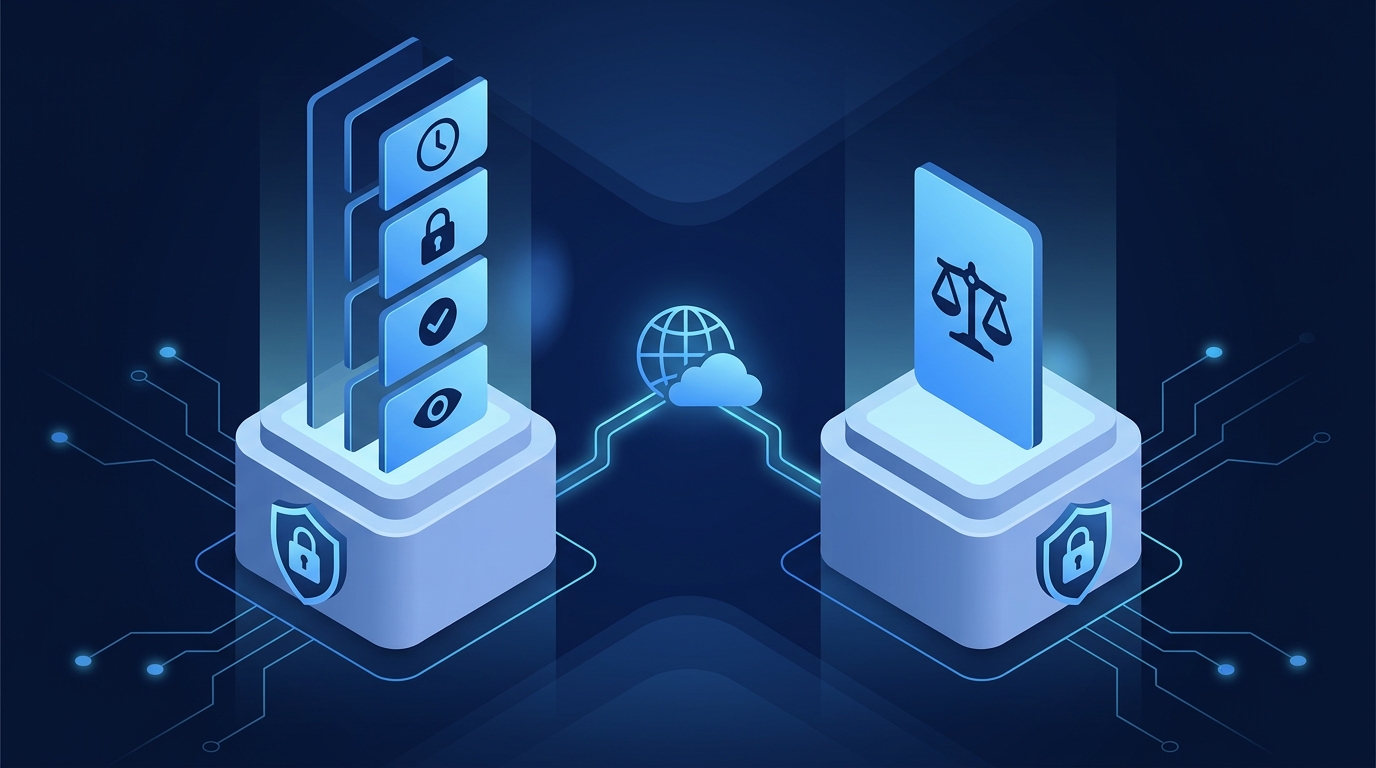
If a prospect or enterprise customer is asking for your SOC 2 report and you have not started the process, the honest short answer is this: you almost certainly need a SOC 2 Type II report eventually, but a SOC 2 Type I report is the faster way to unblock a stalled deal today. Type I attests that your controls are designed correctly at a single point in time. Type II attests that those same controls operated effectively over a period, usually 3 to 12 months. Buyers with mature procurement teams want Type II because it proves you actually do what your policies claim.
The rest of this post explains how to choose between the two without wasting a quarter of engineering time or signing up for an audit scope you cannot support.
What SOC 2 Actually Attests To
SOC 2 is an attestation report produced under the AICPA's SSAE 18 standard. An independent CPA firm examines your controls against the Trust Services Criteria (TSC). There are five criteria categories:
- Security (the only required one, also called Common Criteria)
- Availability
- Processing Integrity
- Confidentiality
- Privacy
You pick the categories relevant to your service. A pure B2B SaaS platform often scopes Security plus Availability and Confidentiality. A payroll or health data processor usually adds Privacy.
The report itself is a document, not a certificate or a badge. A reader, typically a security or vendor-risk team on the buyer's side, reads the auditor's opinion, your system description, the list of controls, and the test results. That reader decides whether your control environment is good enough to trust with their data.
SOC 2 Type I vs SOC 2 Type II: The Core Difference
The difference comes down to time.
Type I: Design at a Point in Time
A Type I report answers one question: As of a specific date, are your controls suitably designed to meet the selected criteria?
The auditor reviews your policies, interviews your team, and inspects evidence that the controls exist. They do not test whether a control ran reliably over months. If your access-review policy says "we revoke access within 24 hours of termination," Type I confirms the policy exists and the mechanism is in place. It does not confirm you actually revoked access on time across 40 departures last year.
Type II: Operating Effectiveness Over a Period
A SOC 2 Type II report answers a harder question: Over a defined period, did those controls operate effectively?
The auditor samples evidence across the audit window. For an access-revocation control, that means pulling a sample of terminations and verifying each one was deprovisioned within the committed window. If three out of twenty-five were late, that becomes an exception in the report.
Here is the practical contrast:
| Dimension | SOC 2 Type I | SOC 2 Type II |
|---|---|---|
| Question answered | Are controls designed well? | Did controls operate well over time? |
| Evidence | Point-in-time snapshot | Samples across the period |
| Typical window | A single date | 3 to 12 months |
| Buyer confidence | Lower | Higher |
| Time to first report | Weeks | Months (needs an observation period) |
When Type I Is the Right Call
Type I is not a lesser product. It is a different tool for a different moment. Choose Type I when:
- You have an active deal blocked on compliance and no existing report. Type I can often be delivered in weeks, giving procurement something credible while you build toward Type II.
- You just stood up your control program. You cannot produce a Type II until controls have been operating for a period. Type I validates your design before you commit to a six-month observation window.
- Your buyer explicitly accepts it. Some buyers accept a Type I plus a written commitment to deliver Type II within a set timeframe.
The trap to avoid: treating Type I as the finish line. Most enterprise buyers will accept it once, then expect Type II at renewal. If you stop at Type I, you are repeating the sales-blocking problem a year later.
When You Actually Need Type II
In practice, SOC 2 Type II is the report the market expects from an established vendor. Choose it when:
- You sell to enterprise or regulated buyers. Their vendor-risk teams are trained to ask for Type II. A Type I will prompt a follow-up question, not a signature.
- You already have controls running. If your logging, access reviews, and change management have been operating for six months, you are ready to be tested on operating effectiveness.
- You want a report that covers a window, not a day. Type II demonstrates consistency, which is what reduces a buyer's perceived risk.
A Realistic Path From Zero to Type II
If you are starting cold, the sequence matters. Rushing into a Type II with immature controls produces a report full of exceptions, which is worse than no report.
- Scope the engagement. Decide which Trust Services Criteria apply. Narrow scope is cheaper, faster, and easier to defend.
- Run a readiness assessment. Identify gaps between your current state and the criteria. This is where most of the real work surfaces.
- Remediate and instrument. Implement the missing controls and, critically, make them produce evidence automatically.
- Consider Type I as a bridge. If a deal is waiting, get Type I now.
- Run the observation period. Let controls operate for 3 to 12 months while evidence accumulates.
- Complete the Type II audit. The auditor samples across the period and issues the opinion.
Automated evidence collection is what makes this sustainable. A control that depends on someone remembering to take a screenshot every month will generate exceptions. A control wired into your systems will not. For example, enforcing branch protection and review on every change is a verifiable change-management control:
# Example: required pull-request approvals as an enforced control
branch_protection:
  main:
    required_pull_request_reviews:
      required_approving_review_count: 2
      dismiss_stale_reviews: true
    required_status_checks:
      strict: true
      contexts:
        - "ci/tests"
        - "security/sast"
    enforce_admins: true
    restrictions:
      teams: ["platform-eng"]
When controls like this are codified, the evidence (approval records, enforced checks) is produced as a byproduct of normal work. That is the difference between passing a Type II and scrambling for it.
A few engineering practices consistently reduce audit pain:
- Centralize identity. Single sign-on with automated deprovisioning eliminates the most common access exceptions.
- Log immutably. Auditors want tamper-evident logs covering the full period.
- Automate access reviews. Quarterly reviews that generate their own artifacts beat manual spreadsheets.
- Keep change history. Infrastructure-as-code and reviewed pull requests give you change-management evidence for free.
Building this control fabric is where engineering and compliance meet. If you want help designing it rather than retrofitting it, our security and compliance capabilities cover readiness, remediation, and audit preparation. Requirements also vary by sector, which we outline across the industries we support, since a fintech scope differs meaningfully from a healthcare one.
Cost, Effort, and the Renewal Reality
Type II costs more than Type I, both in auditor fees and internal effort, because the observation window demands sustained discipline. But the decision is rarely Type I or Type II in the long run. It is usually Type I then Type II, or straight to Type II if your controls are already mature.
Remember that Type II is recurring. The report covers a window, and buyers expect a current one. That means you need a control program that runs continuously, not a project that ends when the report is signed. The firms that handle this well treat compliance as an operational property of their systems, not an annual fire drill.
FAQ
Can I skip Type I and go straight to SOC 2 Type II?
Yes, if your controls have already been operating for the audit window, typically at least three months. Many organizations with mature practices go directly to Type II. Type I is mainly useful as a faster bridge when you need something credible immediately or when your controls are too new to test for operating effectiveness.
How long does a SOC 2 Type II audit take?
The audit itself is weeks, but the observation period drives the overall timeline. A common first window is 6 months, though you can run 3 months for an initial report. From a cold start, budget several months for readiness and remediation before the observation period even begins.
Does a Type II report expire?
SOC 2 reports do not expire like certificates, but they cover a specific period. Buyers generally want a report whose period ended within the last 12 months. In practice this means running Type II audits on an annual cycle to stay current.
Which Trust Services Criteria should I include?
Security is mandatory. Add Availability if you make uptime commitments, Confidentiality if you handle sensitive non-personal data, Privacy if you process personal data, and Processing Integrity if correctness of processing is central to your service. Start narrow; you can expand scope in later audits.